
Top 5 Genesis Innovations That Redefine Driving in 2026: Advanced Technology and Luxury Features
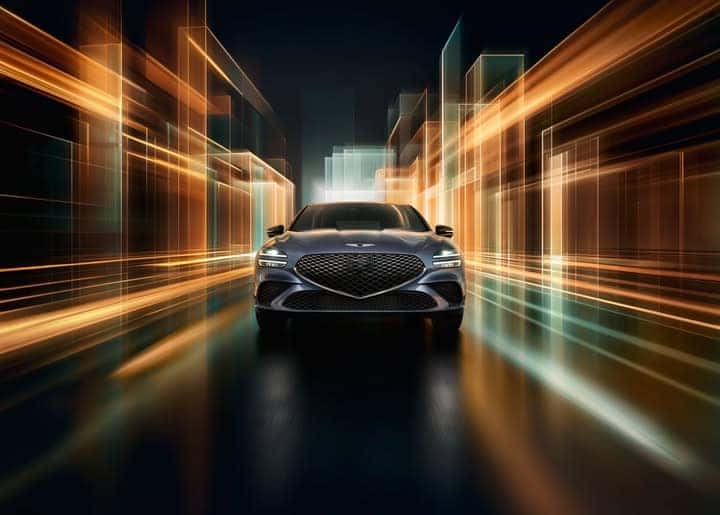
Genesis’s 2026 innovations combine advanced systems and premium craftsmanship to reshape everyday driving into a safer, more connected, and more luxurious experience. This article explains five core innovations—an expansive 27-inch OLED display, a fortified ADAS suite, Genesis Digital Key 2 with connected services, electrified powertrains and hybrids, and electronically controlled suspension with road preview—and shows how each changes visibility, safety, convenience, and ride quality for owners. Readers will learn what each technology does, how it works at a systems level, and practical scenarios where the features provide tangible benefits on commutes, long trips, and urban driving. The goal is to provide actionable clarity about the engineering, user experience, and ownership implications of these 2026 Genesis features while indicating how interested drivers can experience them through local dealership services and demos. The article proceeds through the display, safety systems, connected-service capabilities, electrified models, and suspension technologies to give a balanced technical and practical guide to Genesis’s 2026 portfolio.
What Makes the 27-Inch OLED Display a Game-Changer in 2026 Genesis Models?

The 27-inch OLED integrated display unifies the instrument cluster and central infotainment into a single, high-resolution surface that improves readability and reduces glance time. This integrated approach uses OLED contrast and pixel-level control to render navigation, vehicle data, and media simultaneously with minimal visual clutter, which reduces driver distraction and improves situational awareness. The display’s broad aspect ratio supports split-screen modes and floating widgets so drivers can maintain critical information—speed, navigation prompts, and blind-spot alerts—without swapping screens. Below is a short explanation of the display capabilities followed by a focused table mapping features to driver outcomes to clarify real-world advantages.
| Display Capability | Primary Function | Driver Outcome |
|---|---|---|
| Integrated instrument + infotainment | Consolidates gauges, maps, and media on one surface | Faster glanceability and reduced distraction |
| High-contrast OLED panels | Deep blacks and wide color gamut | Improved night and daytime readability |
| Split-screen and widget zones | Simultaneous map + vehicle data display | Better context for maneuvers such as lane changes |
| Customizable layouts & profiles | Personalized interface per driver profile | Quicker access to frequently used controls |
This table highlights how the 27-inch OLED turns screen real estate into actionable information, improving safety and comfort through clearer, more integrated visual cues.
How Does the OLED Display Enhance Navigation and Infotainment?
The OLED display enhances navigation by rendering high-resolution maps with clearer lane guidance, larger turn icons, and real-time overlays for highway exits and lane suggestions, which reduces cognitive load during complex driving situations. It supports split-screen modes that allow simultaneous display of a full-screen map next to media controls or vehicle telemetry, enabling drivers to monitor range, battery, or tire data while following directions. In practice, the display can show an enlarged lane-assist cue during highway merges while keeping next-turn distance visible, improving reaction time. This reduces the need to switch between screens and lets drivers keep eyes near the road, resulting in smoother maneuvers and fewer hesitations.
The navigation capabilities naturally lead into the personalization features of the display, which let drivers create profiles and use voice recognition to minimize physical interactions while driving.
What Customization and Voice Recognition Features Does the OLED Screen Offer?
The OLED supports profile-based customization so different drivers can preserve preferred layouts, brightness levels, and widget choices, enabling quick transitions between owners or driving modes. Voice recognition integrates with the display to let drivers set routes, adjust climate controls, or change media with natural language commands, which reduces touch interaction and keeps hands on the wheel. Practical tips include configuring a minimal daytime layout for commuting and enabling larger fonts for night driving to reduce eye strain. The interface also adapts contextually—showing battery or range prominently for electric models and fuel-efficiency cues for hybrids—so each powertrain presents relevant metrics automatically.
These customization and voice features set up how Genesis owners benefit from connected services for phone-based access, remote start, and more, which is covered in later sections.
After experiencing the 27-inch OLED in detail, drivers who want hands-on demos can schedule a test drive or explore available 2026 models such as the GV70, GV80, G90, GV60, and the upcoming GV90 at their local Genesis of Schererville showroom. A short demonstration during a test drive is the most practical way to appreciate split-screen navigation, voice recognition, and the visual clarity that reduces distraction.
How Do Advanced Driver-Assistance Systems Elevate Safety in 2026 Genesis Vehicles?
Advanced driver-assistance systems (ADAS) in Genesis 2026 models combine sensor fusion—camera, radar, and ultrasonic inputs—with refined control logic to deliver lane keeping, adaptive cruise, collision mitigation, and automated parking features. These systems work by continuously interpreting surrounding traffic, calculating safe distances and trajectories, and issuing timely warnings or interventions when risk thresholds are met. The result is measurable reductions in low-speed collisions, fewer lane-change incidents, and greater driver confidence during long highway drives or dense urban traffic. The following EAV-style comparison clarifies what each major ADAS feature does and the specific driver benefit you can expect in everyday scenarios.
| ADAS Feature | What It Does | Driver Benefit / Example |
|---|---|---|
| Highway Driving Assist 2.0 (HDA 2.0) | Maintains speed and lane centering using camera+radar | Less fatigue on long highway drives; smooth cruise-to-merge behavior |
| Remote Smart Parking Assist (RSPA) | Parks/recovers vehicle with remote input | Convenient hands-free parking in tight garages |
| Blind-Spot View Monitor (BVM) | Displays side camera feed when indicating | Clearer side visibility during lane changes |
| Forward Collision-Avoidance Assist (FCA) | Warns and brakes when frontal collision likely | Avoids or mitigates low-speed crashes in city driving |
This table demonstrates how each ADAS element contributes to a layered safety approach, where warnings and limited automated control assist the driver without supplanting human oversight.
To illustrate typical usage, consider HDA 2.0 holding lane position and speed on a multi-hour commute while providing smooth steering corrections—this reduces micro-adjustments and driver fatigue. Similarly, RSPA helps when tight parallel spaces would otherwise require repeated attempts. These systems do have operational limits; they perform best when lane markings are visible and sensors are clean, which leads directly to service considerations.
Genesis owners should be aware that ADAS sensors and cameras require periodic calibration and maintenance to remain reliable, and the dealership provides services to support those needs. Genesis of Schererville offers service appointments for ADAS calibration and routine checks, including options like Service Valet for complimentary pickup and delivery for service, and Complimentary Maintenance for the first three years or 36,000 miles, which ensures systems remain correctly aligned and fully functional.
What Are the Key Features of Highway Driving Assist 2.0 and Remote Smart Parking Assist?
Highway Driving Assist 2.0 blends adaptive cruise control and lane-centering to maintain safe gaps and reduce steering effort on defined highway sections, using map data and sensor inputs to manage speed changes near interchanges. It is optimized for sustained highway use, handling gradual curves and speed limit transitions, but drivers must remain attentive and ready to assume control when conditions fall outside system capabilities.
Remote Smart Parking Assist allows drivers to enter or exit parking maneuvers remotely via a key or mobile interface, controlling steering and speed to maneuver into tight spots; it excels in confined urban garages or crowded lots. Both features are most effective when sensors are unobstructed and software is current, which underscores the importance of calibrated systems provided by authorized service teams.
How Do Blind-Spot View Monitor and Forward Collision-Avoidance Assist Improve Driving Confidence?
Blind-Spot View Monitor enhances lateral awareness by projecting live camera images of side lanes into the instrument cluster or OLED display when signaling, replacing uncertain mirror checks with a clear visual. This reduces lane-change hesitation and the risk of sideswipe incidents, especially on multilane highways where vehicles can occupy blind zones unexpectedly. Forward Collision-Avoidance Assist continuously evaluates closing speeds and obstacles ahead, providing escalating alerts and applying automated braking when necessary to reduce impact severity or avoid collisions at lower speeds. Together, BVM and FCA create a cooperative safety envelope that mitigates common crash scenarios and bolsters driver confidence during complex maneuvers.
Because sensors can be affected by road grime or minor impacts, owners are advised to schedule service checks if system warnings appear; Genesis of Schererville’s service center handles ADAS calibrations and offers concierge-style Service Valet to streamline appointments and vehicle care.
What Benefits Does Genesis Digital Key 2 and Connected Services Bring to Drivers in 2026?
Genesis Digital Key 2 extends vehicle access and convenience by turning a smartphone into a secure key while the connected services ecosystem delivers remote control, safety notifications, and enhanced in-car experiences. Digital Key 2 enables phone-based unlocking, locking, and key sharing with family members or temporary users while maintaining revocation and permission controls in the app for security. Connected services add layers like remote start, automatic collision notification, surround-view monitoring, and in-car payment options for tolls or parking, streamlining day-to-day tasks and reducing friction at the curb. The result is an ownership experience where security, convenience, and remote control blend with the vehicle’s physical features to create seamless access and support.
The short examples and practical how-to below show typical use cases and the immediate conveniences that matter most to daily drivers.
Genesis connected services are integrated into ownership tools that also support vehicle monitoring and emergency assistance, adding peace of mind for urban and long-distance drivers alike.
How Does Smartphone-Based Vehicle Access Simplify Daily Use?
Smartphone-based vehicle access replaces physical key routines with digital management: authorized users download the Digital Key 2 profile to their phones, which allows unlock, lock, and engine start permissions while preserving granular controls like speed limits for teen drivers. Key sharing is instantaneous and revocable, so lending the car for a short trip does not require handing over a physical key. Setup is typically performed once in the vehicle with identity verification and pairing steps to ensure secure linkage between device and vehicle. This reduces lost-key scenarios and streamlines household vehicle sharing, especially for families or fleet-like arrangements.
These access features pair naturally with remote operations—such as starting the car from a phone—which are described next. What Remote Features and In-Car Payment Options Are Available?
Connected services offer remote start, remote lock/unlock, vehicle status checks (fuel, charge, tire pressure), and automatic collision notification that contacts emergency services in severe events. In-car payment options handle convenience items like automated tolls and parking payments so drivers can pass through city infrastructure more fluidly. Privacy and security safeguards include account authentication, revocation of shared keys, and encrypted communication to minimize unauthorized access. For drivers who prioritize convenience during errands or multi-driver households, these tools reduce friction and improve everyday usability.
These connected capabilities also enhance the appeal and practicality of electrified models by enabling remote charge scheduling and range monitoring, topics addressed in the next section.
How Are Electrified Performance and Hybrid Options Shaping the 2026 Genesis Driving Experience?
Electrified and hybrid powertrains in Genesis 2026 broaden performance and efficiency choices across the lineup, delivering instant torque for EVs and flexible range for hybrids. Electric models like the GV60 and electrified variants of the GV70 provide strong acceleration and regenerative braking strategies that improve city drivability and reduce operational costs, while the upcoming GV90 flagship EV points toward higher-range capability and premium electric architecture. Hybrids combine internal combustion with electric assist to extend range and lower fuel consumption for mixed driving patterns, making them attractive to buyers seeking a balance between charging convenience and longer trips. The table below provides a concise comparison so prospective buyers can match model capabilities to their usage patterns and ownership priorities.
| Model | Powertrain Type / Range | Ownership Benefit / Use-Case |
|---|---|---|
| GV60 | Battery-electric; rapid torque delivery | Ideal for urban performance and daily commuting |
| Electrified GV70 | Plug-in hybrid option with balanced range | Suit buyers wanting crossover utility with electric efficiency |
| GV90 (upcoming) | Flagship EV expected with extended range | Targets buyers seeking premium range and advanced tech |
| Hybrid variants | Gas + electric assist; improved mpg | Best for mixed driving and range flexibility |
This comparison helps owners decide whether a pure EV, electrified model, or hybrid best fits commuting patterns, charging access, and long-trip needs.
Genesis dealers support electrified ownership through inventory availability, financing specials, and convenience services that reduce friction for buyers. Genesis of Schererville advertises inventory exploration, financing applications, at-home test drives, and remote delivery as ways to experience and acquire 2026 electrified models while taking advantage of lease specials or low-APR offers when available.
What Are the Capabilities of the GV60, Electrified GV70, and GV90 Electric Models?
The GV60 emphasizes a compact luxury EV experience with rapid electric torque, refined regenerative braking, and a compact battery optimized for urban and suburban ranges. Electrified GV70 variants aim to combine crossover versatility with electric driving modes that reduce fuel use and deliver quiet, linear acceleration. The upcoming GV90 flagship EV is designed to be a larger, range-focused vehicle that showcases Genesis’s top-tier electric technology, including advanced driver assistance and premium luxury appointments. Each model targets different buyer needs: the GV60 for urban drivers seeking agility, electrified GV70 for crossover practicality, and GV90 for full-size electric luxury.
These model capabilities influence charging strategy and ownership considerations, which are addressed in the following subsection.How Do Hybrid Powertrains Enhance Efficiency and Range?
Hybrid powertrains pair internal combustion engines with electric assist to smooth acceleration, recapture braking energy, and reduce fuel consumption in stop-and-go traffic. This architecture extends practical driving range without relying solely on public charging infrastructure, making hybrids attractive for buyers with inconsistent access to charging or who frequently undertake long drives. Ownership strategies include using electric modes for daily commuting and reserving the combustion engine for highway trips, optimizing fuel economy and convenience. For drivers transitioning from gasoline-only vehicles, hybrids provide a bridge to electrification with fewer changes to fueling routines and widespread compatibility with existing service networks.
These drivetrain options feed directly into ride tuning and road-preview suspension systems, which alter how performance and comfort are delivered in real time.
How Does Electronically Controlled Suspension with Road Preview Improve Ride Comfort and Handling?
Electronically controlled suspension with road preview uses forward-looking sensors—camera and radar inputs—to anticipate road surface changes and adapt damping and ride height proactively for improved comfort and handling. The system analyzes surface irregularities and upcoming road geometry to stiffen or soften damping milliseconds in advance, reducing body motion over bumps and enhancing steering stability during high-speed maneuvers. This predictive approach increases passenger comfort on rough roads and improves traction and composure when cornering, giving drivers better control without compromising luxury ride quality. Below is an explanation of the suspension components, followed by a short table comparing modes and typical driving scenarios.
| Component | Function | Impact on Ride |
|---|---|---|
| Cameras & radar (road preview) | Detect upcoming irregularities | Prepares damping for smoother response |
| Electronic actuators | Adjust damping in real time | Balances comfort and body control |
| Ride-height control | Raises/lowers chassis | Improves aerodynamics or ground clearance |
| Mode selector (terrain/sport/comfort) | Tailors behavior to conditions | Allows driver-directed tuning |
This table illustrates how individual elements combine to produce a more predictable and comfortable driving experience across scenarios.
What Adaptive Suspension Technologies Are Integrated in 2026 Genesis Models?
Adaptive suspension integrates sensors, actuators, and a central controller that evaluates inputs from cameras, wheel-speed sensors, and steering angle to compute ideal damping on the fly. Actuators modulate valve rates or apply force to springs and dampers while the controller balances comfort targets with handling objectives. The sensor suite includes forward-facing cameras for road preview and lateral accelerometers that measure body motion, enabling precise adjustments. The practical outcome is fewer rebound motions over rough pavement and improved composure during steering inputs, which enhances both passenger comfort and driver confidence.
Understanding these technologies makes it easier to choose appropriate terrain modes and maintenance schedules, topics covered next.
How Do Terrain Modes and Road Preview Features Enhance Driving Dynamics?
Terrain modes let drivers prioritize comfort, sportiness, or off-road capability by changing suspension stiffness, throttle response, and traction systems; for example, Comfort softens damping for rough rural roads while Sport firms the setup for spirited driving. Road preview anticipates bumps and adjusts suspension milliseconds before impact, reducing vertical acceleration felt in the cabin and maintaining tire contact through undulations. On highways, the system smooths transitions across joints and expansion gaps, while in urban driving it minimizes small-bump harshness for better ride quality. Owners should schedule calibration when bodywork or sensor alignment changes occur so the preview system remains accurate and effective.
These adaptive settings, combined with the other technologies discussed above, complete the 2026 Genesis experience that balances safety, comfort, and connectivity.
Genesis of Schererville invites drivers to experience these technologies firsthand. To facilitate sales and service intent, interested buyers can schedule a test drive to experience the 27-inch OLED screen, ADAS features, and electrified driving across available 2026 models by contacting Genesis of Schererville to explore inventory and set up at-home test drives or remote delivery. Service customers can arrange maintenance appointments or ADAS calibrations through Genesis of Schererville’s service team, and owners should note benefits such as Service Valet for complimentary pickup and delivery, Courtesy Replacement Vehicles, Complimentary Maintenance for three years or 36,000 miles, and 24/7 Enhanced Roadside Assistance when evaluating ownership convenience.
For drivers who want to prioritize convenience, Genesis of Schererville supports remote delivery and at-home test drives as part of the buying experience, and its service options streamline upkeep so advanced features like ADAS calibration and suspension preview continue to perform as designed.
0 comment(s) so far on Top 5 Genesis Innovations That Redefine Driving in 2026: Advanced Technology and Luxury Features