
Luxury Meets Sustainability: Exploring the 2026 Genesis Electrified Innovations and Electric SUV Lineup
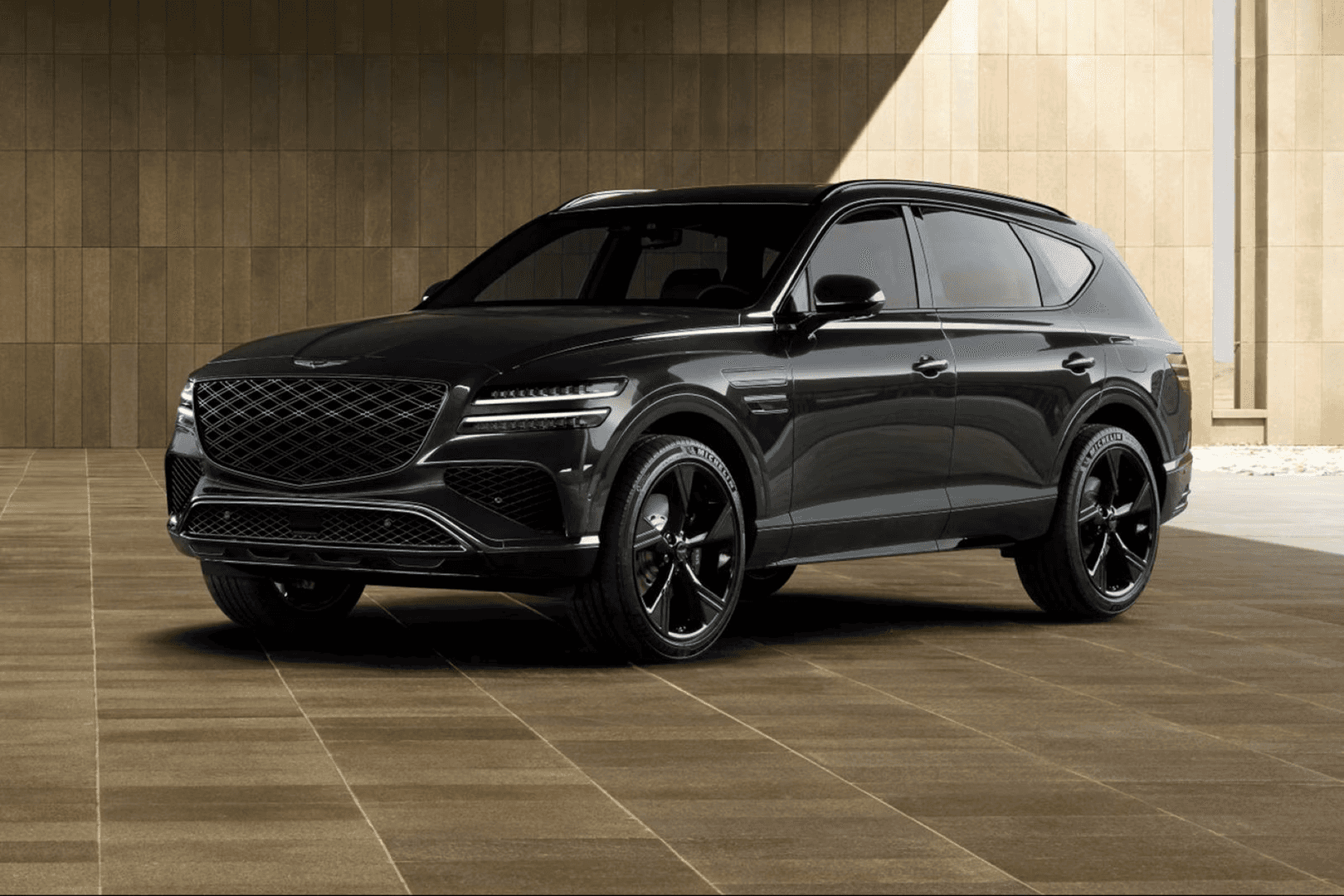
Genesis’s 2026 electrified lineup positions luxury and sustainability as complementary strengths rather than trade-offs, pairing refined craftsmanship with electrified powertrains across SUVs and sedans. This article explains what defines the Electrified GV70, the GV80’s electric and hybrid paths, and how compact models like the GV60 deliver premium urban performance, while also tracing Genesis’s broader sustainability commitments. Readers will learn how advanced charging standards, interior materials, and driver-assist systems translate to real-world value, and how local ownership is supported by dealership services and regional charging resources. The piece maps model-specific attributes, compares electric versus hybrid trade-offs, and outlines ownership advantages available through Genesis research, all framed with contemporary context for late 2025. Expect model highlights, EAV-style spec comparisons, actionable buying and service pathways, and technology explanations that clarify why Genesis is a distinctive choice in premium sustainable mobility.
What Defines the 2026 Genesis Electrified GV70 and Its Luxury Electric SUV Features?
The 2026 Electrified GV70 defines a luxury electric SUV by integrating signature Genesis design language with electrified mechanics, delivering refined cabin experiences and sustainable material choices.
This section outlines the GV70’s top luxury cues, infotainment and ADAS integration, plus how charging standards like NACS influence practical ownership. The vehicle’s interior centers convenience and technology, while powertrain choices aim to balance performance and efficiency for mixed commuting and longer trips. Below we examine design, materials, and charging architecture in detail and provide a concise EAV table that compares likely trim and powertrain attributes to help prospective buyers parse options.
What Are the Key Design and Interior Innovations in the 2026 Electrified GV70?
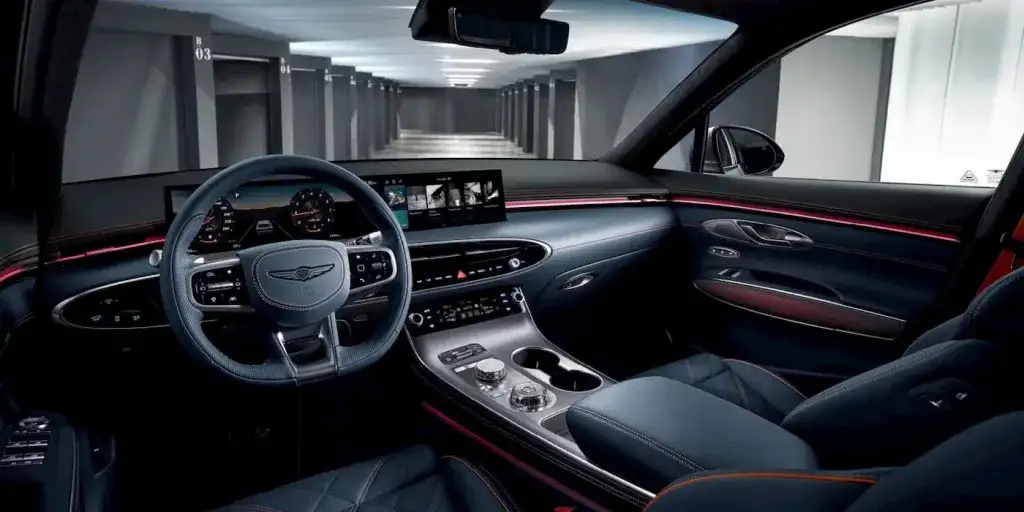
The Electrified GV70 emphasizes a harmonic cabin layout where the 27-inch curved display acts as the technological focal point, consolidating navigation, media, and vehicle controls into a unified surface. Premium seating materials include eco-processed leather and other sustainable trim options that preserve tactile luxury while reducing environmental impact. Acoustic engineering and refined sound insulation support a serene ride, allowing occupants to experience the cabin’s high-fidelity audio and quiet EV operation. These design choices serve both aesthetic and functional goals, improving perceived quality while aligning with sustainability objectives and leading into how the GV70’s powertrain supports this experience.
How Does the 2026 GV70 Deliver Sustainable Performance and Advanced Charging?
The Electrified GV70 pairs electric motors and battery modules engineered for responsive torque delivery and thermal efficiency, which together improve energy use and extend effective range in daily driving scenarios. Charging compatibility with the North American Charging Standard (NACS) expands accessible fast-charging networks, simplifying long-distance travel and public charging sessions for owners. Regenerative braking strategies and battery module architecture help recover energy in urban stop-and-go driving, reducing operating costs and wear on friction brakes. The GV70’s expected performance focus and practical charging support make it a strong contender for drivers seeking premium comfort alongside lower lifecycle emissions.
Before reviewing a concise comparison of Electrified GV70 variants, here are the standout features in list form to summarize the model’s defining attributes.
- The Electrified GV70 highlights three core strengths for luxury EV buyers: Integrated 27-inch curved display: Centralizes infotainment, vehicle controls, and navigation into a single high-resolution surface. Sustainably sourced interior materials: Eco-processed leather and recycled trims deliver premium feel with reduced environmental footprint. NACS fast-charging compatibility: Increases access to high-power charging stations for practical long-distance use.
The short list above clarifies why the Electrified GV70 blends luxury and sustainability, and the table below provides an EAV-style comparison for likely trims and powertrain considerations.
| Variant | Key Attribute | Expected Value |
|---|---|---|
| Electrified GV70 (Base) | Focus | Premium urban range and refined ride; high-tech cabin |
| Electrified GV70 (Performance) | Focus | Enhanced motor output and sport-tuned response; driver-focused suspension |
| Electrified GV70 (Luxury) | Focus | Upgraded interior materials and comfort features; advanced sound insulation |
The automotive industry is actively engaged in developing new vehicle architectures to meet stringent emission reduction targets, a trend that underpins Genesis’s electrified innovations.
Genesis Electrified Innovations: Benchmarking Future Passenger Vehicle Architectures
The subject of this study was developed within the Electrified Vehicles Product Planning department at Fiat Chrysler Automobiles and pertains to passenger vehicle architectures. The objective of this work is to establish a benchmark for future vehicle architecture strategies adopted by passenger car manufacturers in the challenging context of more stringent carbon dioxide emission reduction targets for 2025 and 2030, as mandated by the European Union. The investigation period extends up to 2024 to identify how automotive manufacturers will navigate the radical transformation of the European automotive market from 2025 onwards. The methodology involved initiating the process by searching for data and information on car manufacturers’ architecture portfolios to evaluate past, present, and future trends. The collected data and information were validated through an examination of carmaker press releases and investor relations reports. Subsequently, a detailed analysis of electrification technologies and vehicle architectures employed by each model was conducted. Consequently, the electrification technologies adopted by each vehicle platform were identified. Following this, vehicle architectures were clustered by typology: conventional platforms designed for internal combustion engines; modified conventional platforms, originally designed for internal combustion engines and subsequently adapted for electrified vehicles; multi-energy platforms, flexibly designed for both internal combustion engine and electrified vehicles; and dedicated battery electric vehicle platforms, designed from the outset.
How Does the 2026 Genesis GV80 Electric and Hybrid Model Elevate Luxury and Sustainability?
The 2026 GV80 expands Genesis’s luxury footprint by offering both electric and hybrid powertrain approaches that prioritize interior refinement, flexible range options, and reduced lifecycle emissions. The electric GV80 pursues full BEV efficiency and a silent, instant-torque driving experience, while the hybrid GV80 blends internal combustion with electrification to extend range and ease long-distance travel in regions where charging availability varies. Both variants share cabin upgrades—premium materials, acoustic improvements, and advanced infotainment—maintaining Genesis’s luxury positioning while offering different sustainability trade-offs. Below we compare expected attributes and cover local availability notes that explain how buyers can explore these models at Genesis of Schererville.
What Are the Expected Features and Powertrain Options of the 2026 GV80 Electric and Hybrid?
The GV80 Electric is anticipated to employ dual or multi-motor layouts and a high-capacity battery pack designed for smooth power delivery, while the GV80 Hybrid pairs a turbocharged gasoline engine with an electric motor to enhance fuel efficiency and provide electrified torque fill for mixed driving. Standard luxury attributes likely include the 27-inch curved display, multi-zone climate control, and enhanced materials, with higher trims emphasizing noise reduction and rear-seat comfort. From a sustainability perspective, the electric variant lowers tailpipe emissions entirely, whereas the hybrid provides a transitional solution for drivers seeking extended range without relying solely on public charging. This clarity about trade-offs helps buyers match driving patterns to the GV80 configuration that best meets their priorities.
The table below contrasts the electric and hybrid GV80 in an EAV-style format to aid comparison.
| Model | Powertrain Attribute | Expected Characteristic |
|---|---|---|
| GV80 Electric | Powertrain | All-electric motors; battery-first architecture; NACS charging compatibility |
| GV80 Hybrid | Powertrain | Gasoline engine + electric motor; improved combined efficiency; plug-in hybrid not currently announced |
| GV80 (Conventional) | Powertrain | Traditional internal combustion with luxury refinement; alternative for current infrastructure limits |
Given these distinctions, prospective buyers in Northwest Indiana can evaluate whether a fully electric experience or hybrid flexibility fits their driving habits, and check local dealership channels for reservation steps. For readers interested in local timelines and arrangements, Genesis of Schererville can provide updates and help schedule reservations or test drives through its sales and finance teams.
What Makes the Genesis GV60 a Compact Luxury Electric SUV for 2026?
The GV60 positions itself as a compact luxury EV that emphasizes agile handling, efficient electric power delivery, and an interior scaled for urban lifestyles without sacrificing premium finishes. Its compact footprint is matched with quick throttle response and tailored suspension tuning to balance comfort with dynamic control, making city driving and highway cruising equally composed. The cabin architecture borrows luxury cues from larger Genesis models—consolidated displays, sustainable upholstery, and acoustical treatments—offering a premium occupant experience in a smaller package. Below we explore how the GV60 achieves this performance-design equilibrium and list the vehicle’s key technology and safety inclusions. You can learn more at the Genesis GV60 page.
How Does the GV60 Combine Performance with Sustainable Design?
The GV60 uses lightweight engineering, regenerative braking systems, and efficient electric motors to deliver responsive acceleration while minimizing energy consumption for typical daily use. Sustainable design shows up in material selections like eco-processed leathers and recycled trim components that retain high-end tactile qualities while lowering environmental impact. Motor calibration and chassis tuning prioritize balanced handling, allowing drivers to experience both brisk city acceleration and composed long-distance comfort. These integrated performance and material choices reduce operating cost and environmental footprint, leading naturally into the vehicle’s technology and safety suite that supports everyday confidence.
The broad implications of resource consumption and environmental degradation highlight the importance of sustainable practices across all industries, including automotive design and material selection.
Genesis Sustainability: Exploring Efficient Resource Utilization and Future Generations
Contemporary population growth and consumption patterns are surpassing environmental thresholds, degrading the quality of our current world and jeopardizing the well-being of future generations. Increased human presence is a driver of economic growth, leading to a rise in global demand for goods and services, and consequently, an escalation in resource consumption. We are consuming resources at a rate exceeding Earth’s regenerative capacity, resulting in significant environmental repercussions and provoking unprecedented environmental transformations. Nevertheless, it remains possible to mitigate these adverse changes through the implementation of more efficient and conscientious resource management. The construction sector, characterized by its substantial consumption of materials and energy, can assume a pivotal role in these positive dynamics. Interior designers, operating within this sector, recommend, select, and utilize materials and products in their daily practice, and therefore should be cognizant of…
The future of interiors. An exploration of sustainable materials and practices.
What Luxury Technology and Safety Features Are Included in the GV60?
The GV60 includes a consolidated digital cockpit with smartphone integration, connectivity services, and a robust ADAS package designed to assist in urban and highway environments. Standard safety elements typically cover lane keeping, adaptive cruise control, automated emergency braking, and parking assist features, all tuned to coordinate with EV-specific systems like regenerative braking. Luxury comforts include heated and ventilated seating, premium sound, and customizable ambient lighting that enhance occupant experience. These capabilities combine to make the GV60 a compact but complete luxury EV option for buyers prioritizing technology, safety, and sustainability.
Here is a quick list summarizing the GV60’s standout attributes:
- GV60 highlights that appeal to urban luxury buyers: Agile performance: Electric torque and calibrated chassis for responsive handling. Sustainably sourced cabin: Eco-processed materials that maintain premium feel. Comprehensive ADAS and connectivity: Integrated safety and convenience technologies.
How Does Genesis Commit to Sustainability Beyond Electric Vehicles?
Genesis’s sustainability approach extends beyond electrification to include material sourcing, manufacturing considerations, and lifecycle thinking that reduce environmental impact while preserving luxury quality. Reported initiatives emphasize the use of eco-processed leathers, recycled interior components, and efforts to minimize waste and emissions across production chains. Lifecycle strategies also involve battery recovery and recycling frameworks that seek to keep valuable materials in circulation and reduce raw resource demand. These practices influence vehicle design choices and owner outcomes, improving long-term environmental performance alongside the immediate benefits of electrified drivetrains.
What Environmental Practices Support Genesis’s Sustainable Luxury Vision?
Genesis has highlighted materials innovation such as eco-processed leathers and increased use of recycled polymers within cabin trim to lower the carbon intensity of interiors while maintaining desired tactile standards. Supply chain measures and manufacturing process optimizations aim to reduce embodied emissions through energy efficiency and responsible sourcing, and reported programs address end-of-life battery collection and recycling. These environmental practices demonstrate a systems view—linking material choices, production methods, and circularity—to deliver luxury vehicles with lower lifecycle impacts.
How Do Genesis Sustainability Features Enhance the EV Ownership Experience?
Sustainability-focused engineering can translate directly to owner benefits through lower operating costs, reduced maintenance complexity, and positive resale perceptions tied to responsible materials and end-of-life programs. Efficient electric powertrains reduce fuel expenses and simplify service intervals, while material durability and refined cabin assembly preserve long-term vehicle quality. Owners also benefit from integrated charging standards and connectivity that optimize energy usage and route planning for efficient travel. These practical outcomes make sustainability a measurable part of ownership, reinforcing both environmental and user-centered advantages.
The following list outlines three consumer-facing sustainability advantages to consider when evaluating a Genesis EV.
- Ownership sustainability benefits include: Lower operating costs: Electric drivetrains reduce fuel and routine service expenses. Durable, eco-conscious materials: Long-lasting interiors with lower embodied impact. Lifecycle programs: Battery recycling and responsible sourcing improve long-term sustainability outcomes.
What Are the Benefits of Owning a 2026 Genesis Electric Vehicle at Genesis of Schererville?
Owning a 2026 Genesis EV through Genesis of Schererville pairs the brand’s product strengths with dealer-level services that reduce purchase and ownership friction, especially for buyers in Northwest Indiana and the broader Chicagoland area. The dealership supports ownership with customer-centric programs and maintenance coverage that align with EV convenience needs, making transitions to electrified driving easier and more predictable.
How Does Genesis Service Valet and Complimentary Maintenance Support EV Owners?
Genesis Service Valet provides pick-up and drop-off service for scheduled maintenance, saving owners time and simplifying service logistics—particularly useful for EV owners who balance charging schedules and daily mobility needs. Complimentary maintenance (3 years/36,000 miles) covers scheduled service items as reported, reducing early ownership costs and removing a common barrier to adoption. Genesis Concierge options, including at-home test drives and home delivery, further reduce friction for prospective buyers evaluating EVs. Together, Service Valet, complimentary maintenance, and concierge services create a supportive ownership experience that prioritizes convenience and predictable care.
In order to map dealership services to owner benefits clearly, the table below provides a local EAV-style mapping that aligns services with practical outcomes for Genesis owners.
| Dealership Service | Owner Benefit | Local Value |
|---|---|---|
| Genesis Service Valet | Convenience | Vehicle pick-up/drop-off for service appointments |
| Complimentary Maintenance (3 years/36,000 miles) | Cost savings | Scheduled service items covered at no extra charge |
| Genesis Concierge | Accessibility | At-home test drives and home delivery to simplify purchase |
What Local EV Charging Solutions and Incentives Are Available in Northwest Indiana?
Northwest Indiana and Chicagoland feature a growing mix of public charging nodes and fast-charging corridors compatible with NACS-equipped vehicles, improving practicality for regional EV owners. Utility and regional incentive programs can provide additional purchasing or charging benefits, so owners should verify current eligibility and incentives with local authorities and their dealership. For daily charging, home installation of a Level 2 charger typically offers the most convenience, while public fast chargers support long trips; NACS compatibility simplifies access to expanding networks. Prospective buyers can consult Genesis of Schererville’s service and finance teams for local guidance on charging infrastructure and incentive programs to maximize ownership value.
Below is a short list summarizing practical local charging considerations for owners in the region.
- Local charging and incentive considerations: Public fast-charging access: NACS compatibility increases available charger options. Home Level 2 charging: Most convenient for daily recharging and range management. Regional incentives: Utility or local rebates may offset installation or purchase costs.
The increasing adoption of electric vehicles is intrinsically linked to the development of charging infrastructure and its integration with the electricity grid, a crucial factor for achieving emissions reduction targets.
Genesis Electrified: EV Charging and Grid Integration for Emissions Reduction
The adoption of electric vehicles (EVs), in conjunction with a decarbonizing electricity grid, can significantly contribute to the United States achieving its emissions reduction targets1,2. Industry projections indicate a substantial increase in light-duty EVs and their charging infrastructure, with forecasts estimating over 300 million vehicles and 175 million charging points globally by 2035, representing an order of magnitude growth compared to 20213. EV charging inherently links the transportation sector to the electricity grid; however, the transformations within these two sectors are largely uncoordinated, despite their shared objective of reducing emissions4,5,6,7,8,9,10. While the grid implications of transportation electrification have been examined at low, near-term adoption levels, identifying and mitigating systemic consequences at deep levels of EV penetration remains a critical challenge, necessitating models that accurately represent the diverse behaviors and conditions of future drivers11.
Charging infrastructure access and operation to reduce the grid impacts of deep electric vehicle adoption, S Powell, 2022
What Advanced Technology Innovations Define the 2026 Genesis Electrified Lineup?
The 2026 Genesis electrified range features technology that blends large-format displays, advanced driver assistance systems, standardized charging compatibility, and cloud-enabled services to keep vehicles current and convenient. The 27-inch curved display centralizes user interaction, while over-the-air updates and Genesis Connected Services maintain feature relevance across the vehicle lifecycle. ADAS components coordinate with EV-specific systems—such as regenerative braking—to produce safer, more efficient driving behaviors. Below we unpack key tech pillars and explain how they benefit drivers in everyday scenarios.
How Does the 27-Inch Curved Display Enhance the Luxury EV Interior?
The 27-inch curved display enhances UX by consolidating navigation, media, and vehicle controls into a continuous visual plane that reduces driver distraction and simplifies common tasks. This large display serves as an information hub where context-aware surfaces present energy usage, charging status, and route planning in a single glance, aiding decision-making on the go. The aesthetic effect also signals premium craftsmanship, integrating seamlessly with ambient lighting and tactile controls to elevate perceived cabin quality. Together, UX consolidation and visual cohesion improve both safety and the overall luxury impression for occupants.
What Driver Assistance and Safety Systems Are Standard in 2026 Genesis EVs?
Standard ADAS suites in the 2026 Genesis lineup include lane-keeping assistance, adaptive cruise control, and automated emergency braking, all coordinated to work with electric powertrain behavior such as regenerative braking and instant torque delivery. These systems reduce driver workload on highways and in dense traffic by maintaining safe following distances and providing corrective steering inputs when necessary. Integration with connectivity services supports real-time map updates, traffic-aware routing, and over-the-air enhancements to safety features. The result is a layered safety architecture that enhances day-to-day driving confidence and aligns with premium ownership expectations.
Below is a list summarizing the core technological pillars across the lineup:
- Core technological pillars across the lineup: Large-format curved display: Centralized control and clear energy information. ADAS suite: Active safety and driver assistance tuned for EV dynamics. Connected services & OTA: Continuous updates and remote diagnostics for long-term functionality.
0 comment(s) so far on Luxury Meets Sustainability: Exploring the 2026 Genesis Electrified Innovations and Electric SUV Lineup